
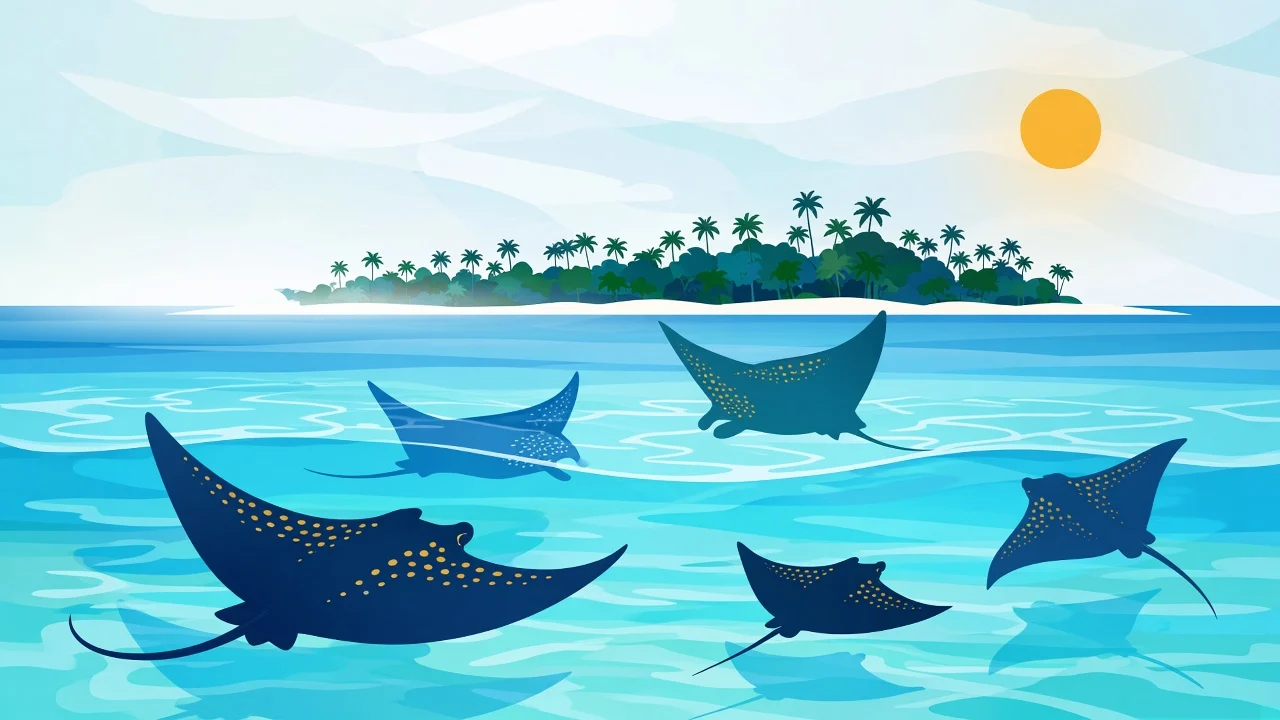
Hanifaru Bay in Baa Atoll is the Maldives’ best-known seasonal reef manta feeding site, and a core zone of the Baa Atoll UNESCO Biosphere Reserve. For UK travellers it is worth planning around the southwest monsoon plankton pulse (commonly May to December, with stronger odds often reported from late July into October) and around days when rangers allow access. Base in Baa (at a resort, or with a carefully chosen local island plan near Dharavandhoo) rather than treating Hanifaru as a casual day trip from Malé.
Inside the bay the experience is guided snorkelling. Scuba is not allowed in the bay. Rules, visitor caps and day-to-day openings change, and empty or closed days happen. Enquire with your month, party size, and whether mantas are the primary goal.
| Where | Hanifaru Bay, in the Hanifaru Region Marine Protected Area, sits in Baa Atoll in the Maldives. |
|---|---|
| Status | It is a core zone of the Baa Atoll UNESCO Biosphere Reserve (the atoll was designated in 2011). Hanifaru has been protected as a marine protected area since 2009. |
| Star animal | The headline animals are reef manta rays (Mobula alfredi). Whale sharks also use the wider feeding story when the plankton is right. |
| Classic season | The season is often May to December, during the southwest monsoon, when plankton gathers. Many operators talk up mid-season weeks. Confirm the picture each year. |
| In the water | You snorkel with a licensed guide. Scuba and motorised dive devices are prohibited in the bay under current marine protected area rules. |
| Access | You enter with a permit or conservation token arranged through a resort or Biosphere channels. Rangers manage vessel and visitor limits, and time in the water is capped (commonly cited at 45 minutes). |
| For UK travellers | Pair a Baa resort, or a base linked to Dharavandhoo, with UK school-holiday or quieter-season timing. Do not bank on one lucky morning. |
Why do UK travellers care about Hanifaru?
Mantas feeding in a shallow, managed bay, sometimes in large numbers, are rare enough that UK snorkellers and photographers treat Hanifaru like a bucket-list wildlife week, the way divers talk about Maaya Thila at night for a different animal and a different skill set.
This is a shared, managed wildlife site. Conservation rules come first, gatherings depend on plankton and current, and some days the bay is quiet or closed. Go for the chance of surface-feeding reef mantas in a UNESCO biosphere setting. Nobody can promise a spectacle.
When is manta season in Baa Atoll and Hanifaru Bay?
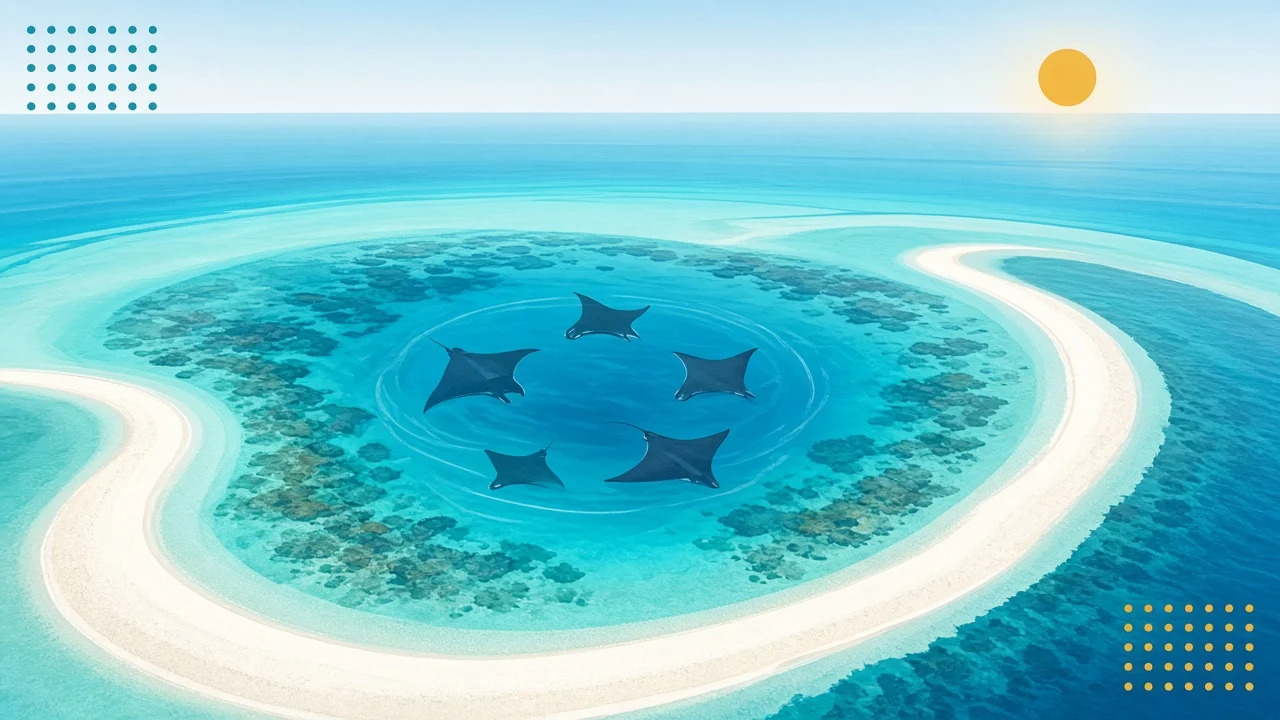
During the southwest monsoon, currents and the bay’s keyhole shape can concentrate zooplankton. Reef mantas (and sometimes whale sharks) follow that food into Hanifaru. Reputable research and management materials commonly describe the feeding season as May through December. Travel and operator briefings often add that late July to early October can be the stronger stretch in many years, with lunar and weather effects on individual days.
Treat every calendar claim as a probability. Exact weeks shift year to year, so a date on a page is never a confirmed booking. Ask your resort or licensed excursion desk for bay status the week you travel, and keep expectations flexible if weather or regulation limits entry.
If your UK dates fall in the drier northeast monsoon (roughly December to April), Baa can still be a beautiful resort base, but Hanifaru’s famous plankton-driven gatherings are less the headline. Whale shark planning in South Ari follows a different calendar and a different kind of trip. See our South Ari whale shark season guide and Dhigurah local island guide if that is the animal you actually want.
How do I access Hanifaru: a day trip or a stay in Baa?

Stay in Baa (preferred for manta-primary weeks)
Sleeping in the atoll gives you repeated chances when plankton, tide and ranger openings line up. Resorts arrange licensed excursions. Some guests base on inhabited islands near Dharavandhoo (DRV) for short boat runs toward Hanifaru when operators and tokens allow. Multiple mornings beat one exhausted day trip.
Long day trips from far away (usually a poor fit)
Hanifaru sits roughly 100 km or more north of Malé. Burning half a day on transfers leaves almost no spare time if the bay is closed, already at capacity, or poor in plankton that morning. We rarely recommend a single attempt from Malé for UK guests who care about mantas.
Liveaboards
Many liveaboards cannot motor into the protected bay itself. Guests typically connect via Dharavandhoo or a licensed taxi-boat arrangement. Confirm current practice with the boat before you plan the week around Hanifaru alone.
Access reality check
Visits are managed: conservation tokens or permits, licensed guides, vessel and snorkeller caps, and ranger control. Fees and exact caps are updated by authorities, so your operator should tell you the current figures on the morning of the trip.
What skill level do snorkellers need, and can I scuba in the bay?
Snorkel only, inside Hanifaru Bay. Current marine protected area regulation prohibits SCUBA and motorised diving equipment in the bay. Mantas often feed near the surface, so tanks are unnecessary for the main experience. If you want scuba elsewhere in Baa (house reefs, thilas, channels), that is a separate outing outside the bay.
Snorkel comfort you actually need
- Confident swimming with a mask and snorkel beside a boat, including a swim back to the anchored vessel when the briefing says so.
- Ability to stay calm in a group of snorkellers when animals pass close.
- Willingness to follow distance rules (management materials commonly cite roughly 3 metres from mantas and whale sharks; keep clear of heads and tails, and do not chase).
- Honesty if you are a weak swimmer. Flotation can help, but Hanifaru is open water, and guides may decline guests who cannot self-rescue.
UK club divers who mainly want tanks should treat Hanifaru as a snorkel highlight on a Baa week, rather than as a substitute for Ari night dives or channel diving.
What conservation rules should I expect?
Rules exist to keep animals feeding and to keep tourism from collapsing the site again. Expect briefings that cover, at minimum:
- A licensed guide is required. Follow the ranger and guide schedule.
- No touching, riding, chasing or blocking animals.
- Stay the stated distance. Let mantas approach you, and do not swim into their path.
- Time in the water is limited (commonly up to about 45 minutes per session under widely cited marine protected area measures).
- No flash photography without special permission, and no drones or other unmanned aircraft where they are banned.
- No anchoring on reef or feeding areas. Boats use designated procedures.
- Capacity limits on vessels and people in the water at once (published figures have varied over time between management plans and field practice, so confirm the briefing you receive).
Breaches can mean fines and trip termination. If a boat looks to be ignoring rangers, that is the wrong trip to join.
How do UK travellers get to Baa Atoll?
- Fly to Malé (MLE). Direct and one-stop options from the UK change by season and airline.
- Continue to Baa by seaplane to the resort lagoon, or by domestic flight to Dharavandhoo (DRV) and then a speedboat, depending on the property.
- Book Hanifaru excursions through the resort or a licensed operator once you are on the island. Do not freelance an unguided visit.
Entry paperwork for the country (a tourist visa on arrival when checks are met, and the free IMUGA Traveller Declaration within 96 hours) is covered in our Maldives entry requirements and visa guide. A duffel or other soft bag, and spare time in daylight, still matter for seaplane days after overnight UK arrivals.
UK school holidays (Easter, summer, Christmas) align with different crowds and flight patterns. Summer weeks can overlap the richer manta period. Book transfer and excursion seats early in peak family periods.
FAQ
Are manta sightings guaranteed?
No. Season and a Baa base improve the odds. Ethics and biology forbid guarantees.
Can I scuba dive inside Hanifaru Bay?
No, under current marine protected area rules. Snorkel only in the bay. Dive elsewhere in Baa if your centre offers it.
Is Hanifaru open every day in season?
No. Weather, plankton, Friday prayer times, religious calendar closures and regulation can limit or close entry. Rangers decide on the day.
Will I also see whale sharks?
Sometimes, when plankton and timing align. Do not plan the whole week on a whale shark promise at Hanifaru. For a more year-round whale shark story, look at South Ari or Dhigurah instead.
Is a day trip from Malé enough?
Rarely, for manta-primary UK travellers. Base in Baa if Hanifaru is the reason for the trip.
How do I get a quote for Hanifaru access?
Operators arrange conservation access, and fees change. Tell us your dates via enquiry or WhatsApp and we will confirm what applies for your stay.
Ready to enquire?
Tell us your UK holiday dates, party size, whether mantas are the primary goal or part of a wider Maldives week, and whether you prefer a resort or local island energy in Baa. We will shape access and transfer plans privately.
Enquire: aviholidays.com/inquiry/
WhatsApp: +9609696941 or +9609842232
Email: [email protected]
Last updated: 12 Nov 2026 (MVT).