

Why do UK divers care about Maaya Thila at night?
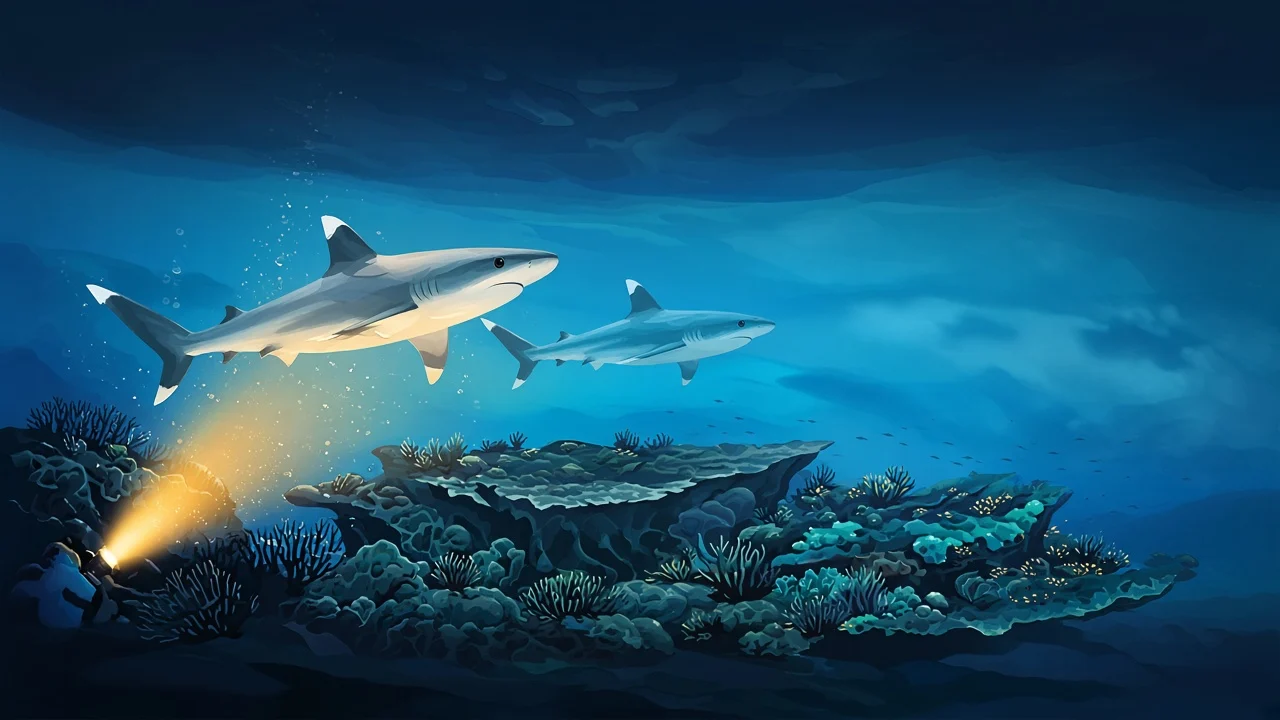
By day, Maaya Thila is already a strong Ari circuit dive: coral-covered pinnacle, overhangs, and regular reef sharks. After dark it changes character. Whitetips that rest or cruise by day become active hunters along the reef. Torch beams pick out morays, sleeping parrotfish, and hunting trevally. That contrast – same rock, different film – is why the night dive has a reputation that spreads quickly among UK club divers and photographers.
It is not a guaranteed “shark circus.” Sightings and current change with tide, season, and luck. Go for the atmosphere and the chance of hunting sharks, not a scripted show.

What is the dive site like?
Maaya Thila is a thila: an underwater pinnacle rising from deeper sand toward a shallow summit. Typical briefings describe:
- A relatively small footprint (roughly tens of metres across), so groups circumnavigate rather than travel long distances.
- Coral terraces, caves, and overhangs around the perimeter.
- Currents that can run moderate to strong because the pinnacle sits in moving water.
- A shallow top useful for the end of the dive / safety stop when conditions allow.
Your guide’s briefing beats any blog. Slack or kinder current windows are preferred for night; centres cancel or swap sites when the water is wrong.
What marine life should I expect on the night dive?
Common night themes (not promises):
- Whitetip reef sharks hunting along the coral.
- Giant trevally and other predators working the same beat.
- Moray eels more active; crustaceans and lionfish in the open.
- Reef fish tucked into coral for the night.
By day, grey reef sharks and dense schools often share the billing. If your centre offers both a day and a night slot on Maaya, take both when conditions allow – they feel like different dives.
Torch etiquette: bring a reliable primary and a backup. Avoid dazzling sharks or your buddy’s eyes; many photographers prefer a softer approach or red filters for close work. Follow the guide’s light plan.
What certification and experience do UK divers need?
There is no single national rule, but reputable Maldives centres typically expect:
- Open Water as an absolute minimum for calm daytime visits – and many will want more for Maaya.
- Advanced Open Water (or equivalent) plus recent dives for current and depth comfort.
- Night Diver specialty or several logged night dives before the Maaya night slot.
- Honest logbook chat: deep, current, and night experience matter more than a laminated card alone.
If you last dived in a UK quarry six months ago, book a check-out or easier Ari site first. Maaya Thila at night is a poor place to rediscover buoyancy.
When is the best time for UK travellers?
Central Maldives diving is often easiest in the drier northeast monsoon (roughly December-April): calmer seas and clearer water for many itineraries. Night dives still run in other months when local weather and current allow. UK school holidays (Easter, summer, Christmas) align with different crowds and flight prices – we will not list rates here, but do book dive seats early for peak weeks.
How do I get there from the UK?
- Fly to Male (MLE) – direct and one-stop options change by season and airline.
- Transfer to North Ari by domestic flight + speedboat, seaplane, or speedboat-only, depending on the property.
- Dive with the resort centre or a liveaboard that schedules Maaya Thila.
Nearby names UK divers often hear in the same planning conversation include resorts and house reefs across North Ari (for example the Halaveli / Maayafushi / Bathala corridor and other Alif Alif bases). Exact boat run times depend on where you sleep. Liveaboards covering Ari frequently include Maaya when conditions fit the itinerary.
Day dive vs night dive – should I do both?
| Day | Night | |
|---|---|---|
| Mood | Colour, schools, grey reefs in the blue | Hunting whitetips, torch-lit reef |
| Current | Still variable – brief carefully | Centres prefer manageable windows |
| Skill | Intermediate comfort with current | Night skills + current comfort |
| Photo | Wide-angle reef and sharks | Torch beams, behaviour, careful lighting |
If you only have one slot and you already have solid night experience, the night dive is the signature. If night is new to you, build confidence elsewhere first.
FAQ
Is Maaya Thila suitable for new Open Water divers?
Usually not as a first Ari dive and rarely as a first night dive. Ask the centre; many will steer newer divers to gentler sites.
Will I definitely see sharks?
No operator should guarantee it. Maaya has a strong track record for reef sharks, especially whitetips at night, but the ocean does not do bookings.
Can snorkellers join?
Maaya Thila is primarily a scuba site. Snorkelling is not the main product here; choose house reefs or dedicated snorkel safaris instead.
Do I need nitrox?
Not mandatory for a typical recreational profile, but many UK divers prefer nitrox on multi-dive Ari days. Check cylinder availability with your centre.
Can Avi Holidays book only the dive?
We focus on the stay and itinerary around good dive access. Tell us your certification level, preferred month, and whether you want resort or liveaboard energy – we will shape an enquiry around that.
Soft next step
If Maaya Thila is on your UK club wishlist, share dates, number of divers, and whether you want a resort base in North Ari or a liveaboard that routes through the atoll.
Enquire: aviholidays.com/inquiry/
WhatsApp: +9609696941 or +98422322
Email: [email protected]